



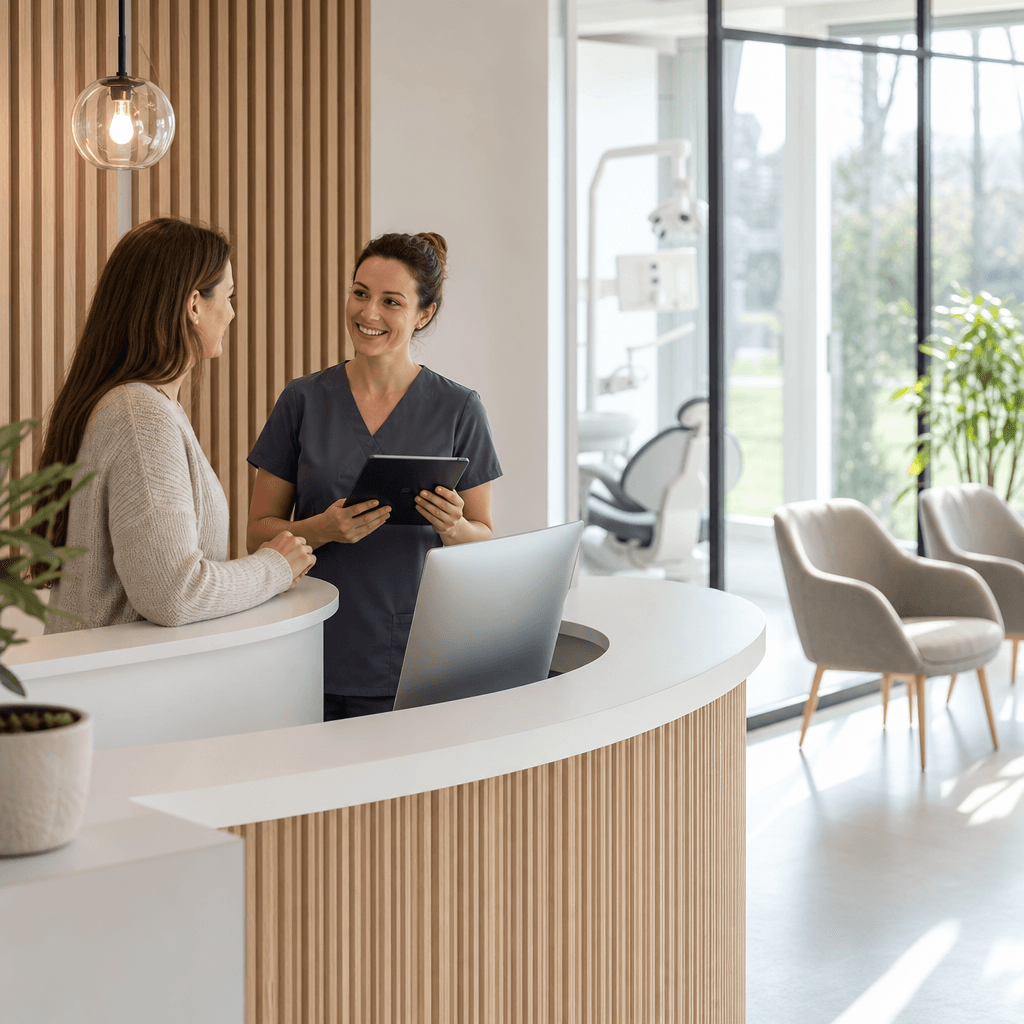
Empty dental chairs cost money. That much is obvious. What's less obvious is where the revenue actually leaks: up to 40% of incoming calls never convert into appointments, and 70% of after-hours callers won't leave a voicemail. They'll simply ring the next practice on their list. The maths is brutal, but the top 10% of practices have figured it out. They're scheduling an average of 107 appointments per day. The difference between them and everyone else often comes down to one thing: what happens when the phone rings.
The economics of an empty chair: Calculating your true hourly loss
The metric that matters most here is revenue per available chair hour. It combines production potential with fixed overhead costs: staffing, lease, utilities, equipment depreciation. Together, these numbers reveal what each unfilled hour actually costs a practice.
An empty chair at 2:00 PM isn't a scheduling inconvenience. It's a margin protection issue. Those overhead costs keep running whether a patient is in the chair or not. The lease doesn't pause. Staff are still on the clock. That hour's loss is permanent and unrecoverable.
The figures vary by practice size, but the principle scales linearly. A solo practice with one chair and €180 per hour in overhead loses €180 with every gap. A six-chair DSO clinic with €1,080 in combined hourly overhead loses six times that during a slow afternoon. The maths doesn't care about practice philosophy or patient mix.
What's interesting is how these losses trace back upstream. Every empty slot started somewhere: a missed call, an after-hours inquiry that went to voicemail, a potential patient who hung up and dialled the next practice. The top performers we mentioned earlier, those scheduling 107 appointments per day, have recognised this connection. They work backward from chair utilisation to identify the exact call-handling breakpoints that create these gaps.
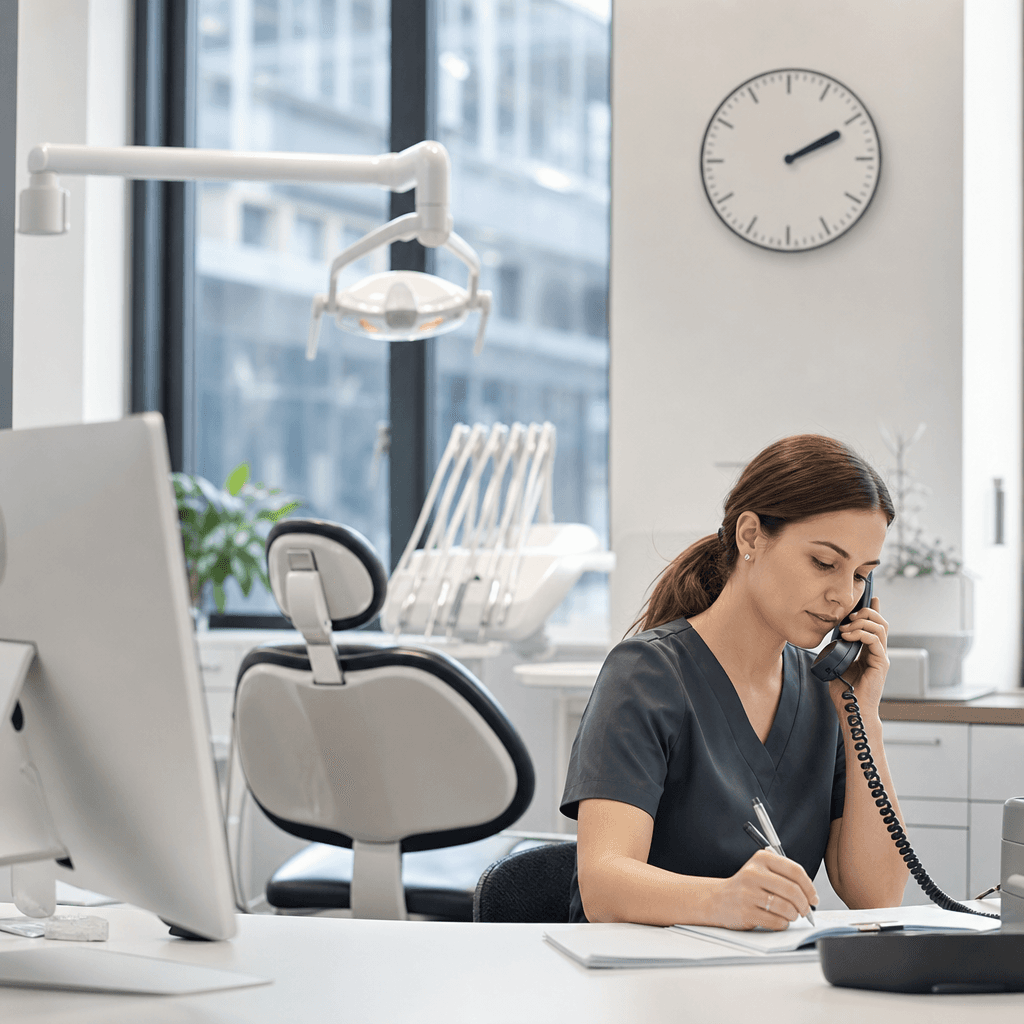
"Every unfilled hour is overhead burned, not revenue delayed."
Where chair hours disappear: The call-to-appointment conversion gap
For the broader revenue cascade behind unanswered calls, see how missed calls cost dental practices thousands.
The leakage starts earlier than most practices realise. Up to 40% of incoming calls never convert into appointments. That's not a scheduling problem. It's a chair-hour problem hiding in plain sight.
The funnel tells the story. Calls come in, but not all get answered. Of those answered, not all receive availability options. Of those offered slots, not all book. And of those booked, not all show up. Each stage bleeds potential chair hours.
A mid-sized practice receiving 60 calls daily and losing 40% to non-conversion? That's 24 potential appointments vanishing before they reach the diary. Multiply by five days, then four weeks. The compound effect is staggering.
What's revealing is that improving phone conversions requires understanding where each failure occurs. The categories differ sharply: wrong timing means the caller wanted evening hours you don't offer. No availability offered suggests the team defaulted to "we're fully booked" without checking alternatives. Caller abandoned hold points to wait times. Untrained phone handling covers everything from poor tone to missed upselling of hygiene appointments.
Each failure type demands its own fix. Practices grouping all lost calls together miss the diagnostic value. The ones with strong conversion rates track these breakpoints individually, then address them separately. The data exists in most phone systems already. The question is whether anyone's looking at it.
The after-hours blind spot: 25% of volume, 70% abandonment
When those calls are urgent rather than routine, the companion guide on after-hours dental emergency handoffs shows how to carry the request into the morning schedule.
A quarter of all patient calls arrive outside office hours. The pattern makes sense: working patients can only phone during evenings, lunch breaks get busy, and dental emergencies don't follow a 9-to-5 schedule. Yet most practices route these calls straight to voicemail.
The abandonment rate tells the story. 70% of after-hours callers won't leave a message. They hang up and dial the next practice instead.
The chair-hour impact becomes clear with basic arithmetic. A practice receiving 200 calls weekly sees roughly 50 of those come after hours. At a 70% abandonment rate, that's 35 potential patients disappearing every week. Not to a competitor's marketing campaign or a better Google review. To a voicemail greeting.
The assumption that after-hours calls are low-priority doesn't hold up. These windows often capture urgent requests, new patient inquiries researching options after work, and recall responses from people who finally found ten minutes to phone back. High-value calls, in other words.
The competitive dynamic is straightforward. When a patient calls three practices at 7:30 PM and two go to voicemail, the one that answers fills their chair. That patient was ready to book. They just needed someone to pick up.
Practices tracking after-hours conversion rates separately from daytime metrics often find their biggest leakage point sitting in plain sight.

Triage decision trees that prioritize chair-filling
The practices hitting 107 appointments daily aren't answering calls randomly. They're routing them based on chair economics.
Emergency calls get priority routing for a simple reason: patients with immediate pain or swelling show up. The no-show rate for genuine emergencies approaches zero. These calls fill same-day gaps that would otherwise burn overhead until close of business. Smart triage systems flag keywords like "pain," "swelling," or "broken" and route them to immediate scheduling capability.
Routine scheduling requests work differently. The practices with strong chair utilisation don't let patients choose from open slots freely. They offer specific times that fill existing gaps first. A caller wanting "sometime next week" gets offered Tuesday at 2:00 PM, the dead hour between morning rush and afternoon procedures, rather than the already-busy Thursday morning.
Recall responses deserve their own priority tier. Hygiene reappointment percentage drives recurring revenue, and patients who don't pre-book during their visit become progressively harder to recover. When these patients finally call back, routing them to voicemail means losing them twice. The successful practices connect recall responses directly to booking capability, capturing the moment of intent.
The triage logic follows the money. Emergencies recover immediate chair-hours with near-certain attendance. Routine requests optimise weekly utilisation patterns. Recall responses secure future capacity that compounds over months. Each call type serves a different economic function, and the routing should reflect that distinction.
DSO scale vs. solo practice agility: Different paths to the same goal
The Europe dental equipment market tells a clear story. Valued at €3.05 billion in 2026, projections put it at €4.15 billion by 2031. Much of that growth traces back to DSO expansion and the operational efficiency investments that follow.
Netherlands and Belgian DSOs treat call handling as centralized infrastructure. Multiple locations share AI-assisted phone systems that route by availability across all chairs in the network. A patient calling the Amsterdam clinic at capacity gets offered a same-day slot in Utrecht. The chair fills. The overhead stays covered.
UK solo practices and smaller groups take a different route. The advantage is speed: faster implementation, direct owner oversight, immediate course correction when something needs adjusting. The constraint is capital. A six-figure phone system investment makes sense for a 40-location DSO. For a two-chair practice in Bristol, the maths doesn't work the same way.
What's interesting is how AI-native dental communication platforms are closing this gap. Recent analysis on how practices are moving from missed calls to maximized chairs shows AI call handling delivering measurable impact within two weeks. Missed-call rates drop. After-hours bookings appear immediately.
The entry barrier has shifted. Practices without DSO-level investment capacity can now access the same core capability: eliminating the gap between call received and chair filled. The paths differ. The destination remains identical.
Building your chair utilization improvement sequence
Measurement comes first. The practices seeing real improvement track calls received, calls answered, conversion rate, and same-day gaps for at least two weeks. That baseline reveals where chair-hours actually disappear. Without it, every fix is a guess. Practices that add an AI dental receptionist remove the after-hours abandonment line from that baseline entirely.
The highest-impact gap deserves attention first. If after-hours abandonment is draining 35 potential patients weekly, solving that takes priority over optimizing daytime call handling. The sequence matters because resources are finite and compound losses aren't.
Pre-booking is a chair-filling priority, not an administrative nice-to-have. Patients who leave without scheduling their next cleaning become progressively harder to recover through recall campaigns alone. The hygiene chair that fills itself six months out requires far less effort than the one chasing patients who've gone quiet.
Framing matters here. The successful practices set margin-protection targets rather than technology adoption goals. "Recover 8 chair-hours weekly" creates clarity. "Implement AI phone system" doesn't tell anyone what success looks like.
Weekly review catches problems early. Chair utilisation is a trailing indicator, showing damage that's already done. Leading metrics, missed calls, voicemail rates, conversion percentages, signal trouble before it becomes an empty 2:00 PM slot. The practices with strong utilisation watch these numbers weekly, adjusting before gaps compound.
Calculate how many chair hours your practice loses to missed calls each week. Voicelabs Dental helps practices capture after-hours bookings and convert more incoming calls into scheduled appointments, protecting your margins without adding front-desk workload.