


Empty chairs cost money. We're seeing dental practices lose between €120 and €200 per no-show, and with average no-show rates hovering around 10 to 15%, that adds up to thousands in lost revenue each month. The good news: a well-timed reminder sequence can cut those numbers by 38 to 50%. The question is which channel mix delivers the best results for your patient base and budget.
Why the 'best' reminder channel depends on your practice profile
The real question isn't which reminder channel performs best. It's which channel mix maximizes chair utilization for your specific patient demographics and operational constraints.
-
High-value appointments deserve priority treatment. A 50% no-show reduction on 90-minute crown procedures delivers roughly 3x the revenue impact of the same reduction on 30-minute hygiene visits. Smart practices weight their reminder strategy accordingly.
-
The revenue stakes are significant. Each no-show costs €140 to €450 in lost chair time. With 5 to 10 weekly no-shows, that translates to €35,000 to €180,000 in annual lost revenue per practice. The math changes how practices think about reminder budgets.
-
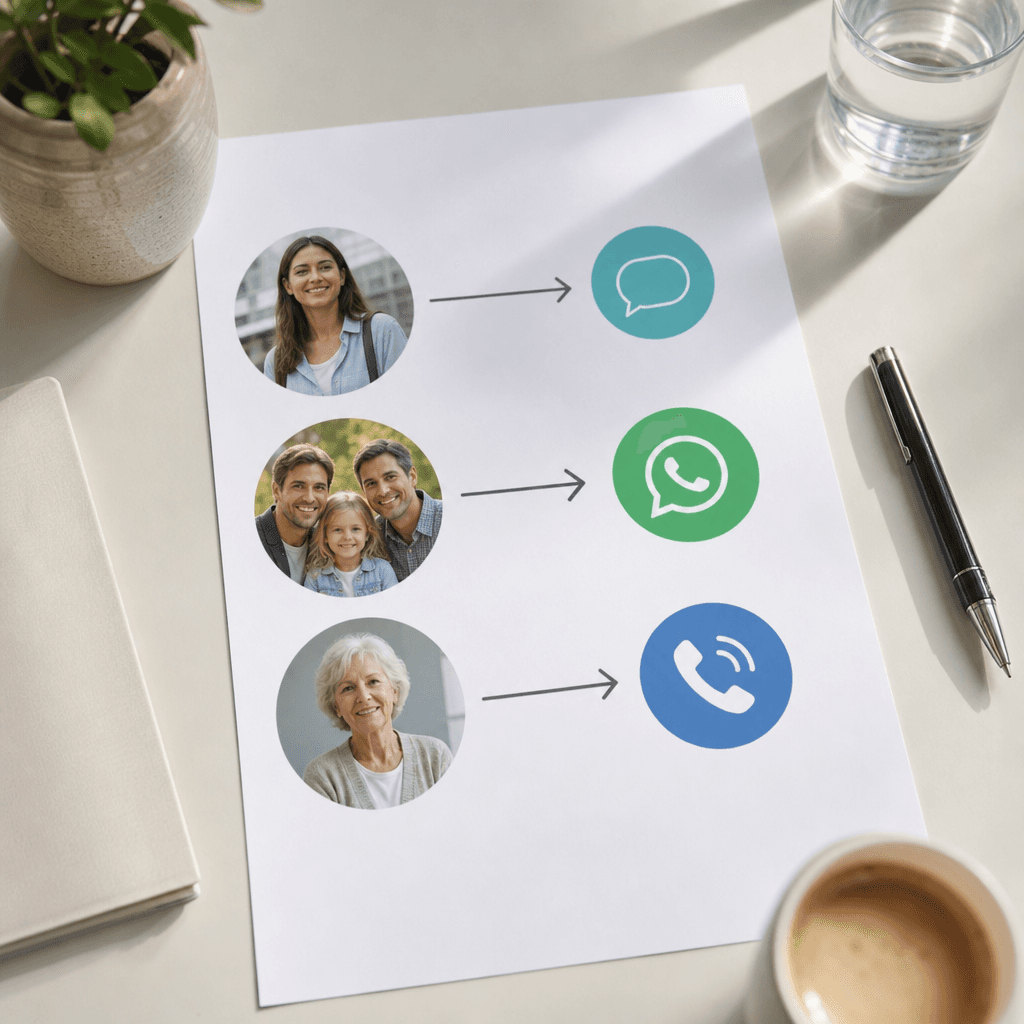
Patient cohorts respond differently. Young professionals with packed schedules show higher engagement with WhatsApp confirmations. Elderly patients often prefer phone calls. Families juggling multiple appointments need easy rescheduling options. One channel rarely fits all.
-
Operational constraints matter. A practice with limited front-desk capacity can't afford 2 to 4 minutes per manual call when automation handles the same task in seconds. Tech infrastructure determines what's actually feasible.
What follows is a diagnostic framework for allocating reminder budget and front-desk effort based on patient segments, appointment values, and existing systems. The goal: matching the right channel to the right patient at the right time.
Channel performance breakdown: What the engagement data actually shows
The numbers tell a clear story about where patient attention actually goes.
WhatsApp leads with 98% open rates and 40 to 60% of patients replying within an hour. That two-way capability matters most for appointments requiring confirmation or adjustments. Crown prep, implant consultations, multi-step treatments. Patients can ask questions, flag conflicts, or reschedule without picking up the phone.
SMS performs differently. The 95% open rate looks impressive until you see the 8% reply rate. That's fine for routine hygiene checkups where a simple "appointment tomorrow at 10am" suffices. Speed of delivery matters more than conversation depth. A recent comparison of appointment reminder platforms highlights this distinction between broadcast-style messaging and interactive channels.
Email sits at 20% open rates for appointment content. Useful as a backup, but not reliable as a primary reminder channel. We're seeing practices use email for treatment plans and consent forms, not time-sensitive confirmations.
The real gains come from combining channels. Multi-channel strategies achieve 12 to 15% lower no-show rates compared to single-channel approaches. The largest improvements appear when patients can easily confirm or reschedule through two-way messaging. One channel sends the reminder. Another catches the response. A third escalates if needed.
Smart practices match the channel to the appointment type and patient preference, not the other way around.
Mapping channels to patient cohorts and appointment types
WhatsApp earns its place for high-value procedures. Crown preparations, implant consultations, and orthodontic adjustments involve significant chair time and revenue. The two-way conversation capability lets patients flag scheduling conflicts, ask pre-appointment questions, or reschedule without calling the practice. That 40 to 60% reply rate within an hour means fewer surprises on treatment day.
SMS works well for routine checkups. A quick "Your hygiene appointment is tomorrow at 2pm" delivers the message with 95% open rates. No conversation needed. Practices running high volumes of standard cleanings and simple procedures get reliable results without the complexity of interactive messaging.
Voice calls still matter for specific cohorts. Elderly patients over 65 often prefer human contact and may not check messaging apps regularly. Chronic no-showers sometimes need that personal accountability. Patients with accessibility needs benefit from direct conversation. The difference is targeting. Calling everyone wastes hours. Calling the right patients preserves the human touch where it counts.
The efficiency gap is substantial. Manual phone reminders consume 2 to 4 minutes per patient during desk hours only. WhatsApp automation takes seconds per patient with 24/7 delivery. That translates to 10 to 20 hours per week of front-desk time freed up for patients actually standing at the counter.
Practices using conditional escalation see the best results. The approach is straightforward: only call patients who haven't confirmed digitally. This strategy for reducing no-shows delivers 52% fewer empty chairs compared to phone-only reminders while eliminating wasted calls to patients who already confirmed.

The diagnostic tool: Finding your practice's optimal channel mix
Three practice profiles emerge from the data, each pointing to a different channel strategy.
Practices with less than 5% elderly patients and full PMS integration see the strongest results leading with WhatsApp across all appointment types. SMS serves only as fallback when delivery fails. These practices typically have younger, digitally native patient bases who expect messaging-first communication. The 98% open rate and rapid reply times mean fewer surprises on the schedule.
The picture shifts for practices with 20% or more patients aged 65 and older, or those running limited tech infrastructure. SMS-first makes more sense here, with selective WhatsApp pilots targeting under-40 patients. Building comfort with digital channels takes time. Forcing a full WhatsApp rollout on resistant patient cohorts creates friction without the engagement gains.
Then there's the high-stakes scenario. Practices struggling with no-shows on expensive procedures, think implants, crowns, full arch restorations, should prioritize WhatsApp for those specific appointment types regardless of overall patient demographics. The revenue impact justifies the channel investment.
Measuring success goes beyond no-show percentages. Chair utilization impact tells the real story. Voicelabs Dental tracks revenue recovered per channel, making ROI on each reminder investment visible.
The 3-touch sequence remains the benchmark: confirmation at booking, 48-hour reminder, 24-hour reminder. Practices using this cadence see 38 to 50% no-show reductions. Those adding easy rescheduling options push that number to 60 to 70%. The combination of timing and convenience matters more than any single channel choice.
Implementation priorities: Where to start based on your constraints
The starting point depends on what's actually hurting your practice most. The voice channel in that mix can be an AI dental receptionist, so confirmations and reschedules are handled on the same call.
Practices drowning in phone work see the fastest gains from WhatsApp automation. Those 10 to 20 hours recovered weekly don't just disappear. Smart teams redirect that capacity toward personalized voice calls for high-risk patients, the chronic no-showers and complex procedure appointments where human contact moves the needle.
A different path works better for practices with substantial elderly populations. SMS as the primary channel respects communication preferences while still delivering 95% open rates. Voice call escalation catches non-responders. WhatsApp pilots with younger cohorts who actively opt in build familiarity without forcing change.
For hygiene-focused practices, recall sequences benefit enormously from two-way conversation capability. Patients rescheduling through WhatsApp maintain the relationship even when life gets in the way. Following proven appointment reminder best practices for recall timing and messaging keeps the hygiene schedule full.
The ceiling is higher than most practices expect. South Asia cohort data covering 8,400+ appointments showed no-show rates falling from 31% to 10% after implementing WhatsApp Business API reminders. That's a 68% reduction. Dental clinics in that study started at 28 to 35% baselines, similar to struggling European practices.
Channel strategy should evolve over time. Tackle the highest-impact constraint first, whether that's front-desk capacity, high-value no-shows, or elderly patient communication, then expand systematically.
Want to see how Voicelabs Dental automates multi-channel reminders with smart escalation based on your patient demographics? Book a demo to explore your practice's optimal channel mix.