

Thirty percent of calls going to voicemail during peak hours. That's the reality for many dental practices, and it raises an uncomfortable question: is the problem a staffing gap, or is it a workflow that was never designed to handle modern patient expectations? We're seeing practices split into two camps. Some hire temporary cover and hope the phones quiet down. Others automate the routine calls entirely and watch no-shows drop by 30% within weeks. The difference often comes down to diagnosis, not budget.
Why dental practices struggle to answer every call
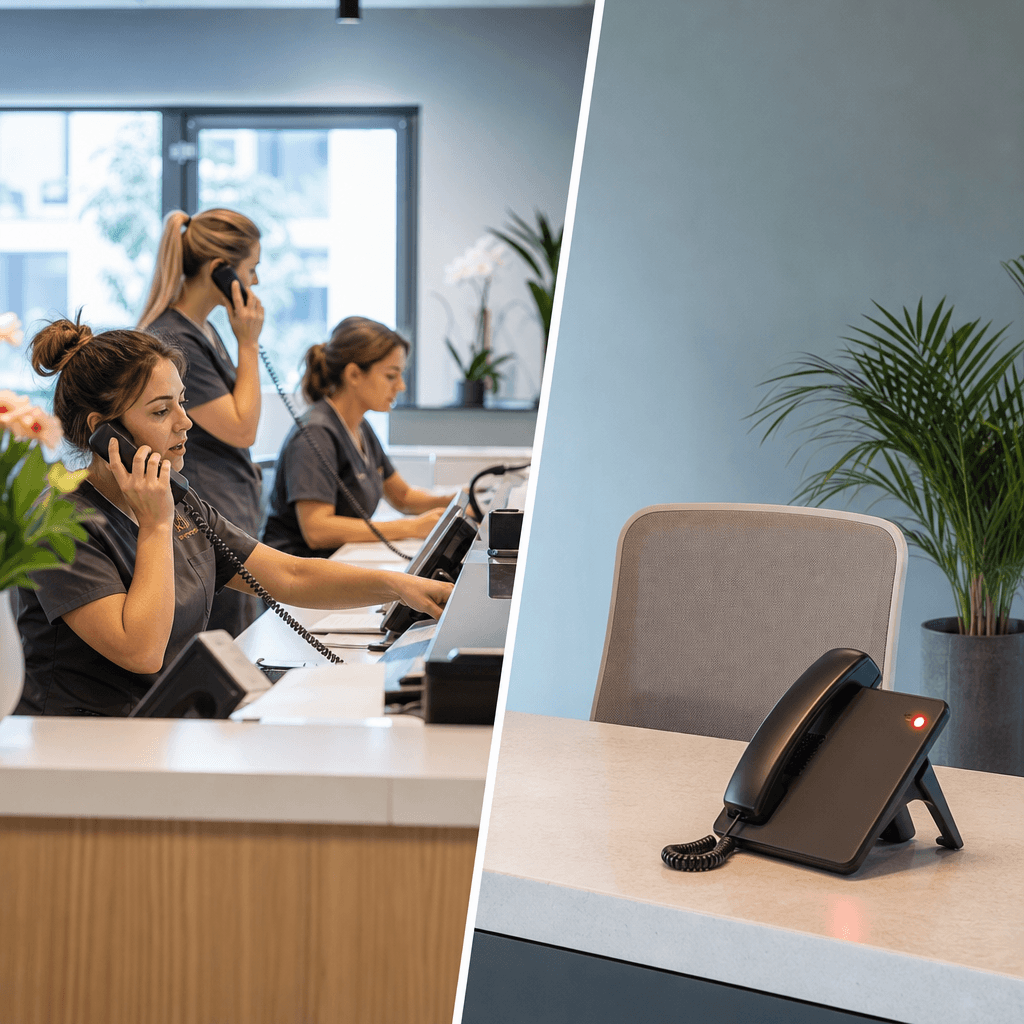
The 30% voicemail rate during peak hours represents more than an inconvenience. It's a direct hit to patient acquisition and revenue, with potential new patients moving on to the next practice before anyone picks up.
The causes typically fall into two categories:
- Temporary staffing gaps. Sick leave, lunch breaks, holidays, and unexpected absences create predictable windows where phone availability for dental practices drops. These are short-term issues with short-term fixes.
- Structural process bottlenecks. High call volumes combined with repetitive tasks, such as appointment confirmations, insurance queries, and recall reminders, overwhelm even fully staffed front desks. The phones keep ringing because the workflow itself can't keep pace.
- The assumption trap. Most practice owners default to "we need more hands" when missed calls spike. But hiring doesn't solve a process problem. If every call takes five minutes because staff are manually checking availability or verifying insurance, adding another person just delays the bottleneck.
- Competing priorities at reception. Front-desk teams juggle check-ins, payments, and patient questions while phones ring. The call often loses.
The distinction matters because the solutions are different. One requires temporary cover. The other requires rethinking how calls are handled in the first place. Getting the diagnosis right saves both money and frustration.
The European dental labour market reality
Step 1: Recognize that dental practices compete for the same talent pool as everyone else.
Front-desk roles sit squarely in the hospitality and retail labour market. Dental practices aren't just competing with the clinic down the road. They're competing with hotels, restaurants, and retail chains offering similar pay for similar skills. The result? Recruitment timelines stretch longer, and candidates have options.
Step 2: Understand why the workforce isn't growing.
According to data on the dental staffing shortage, new dental hygiene graduates mostly replace departures rather than expanding the total workforce. The pool stays flat while patient demand rises. Practices in the Netherlands, Belgium, and the UK all report the same pattern: finding qualified front-desk staff takes months, not weeks.
Step 3: Factor in the real cost of hiring.
Understanding what a dental receptionist costs means looking beyond salary. Recruitment fees, training time, and turnover all add up. And even after hiring, the structural bottlenecks from the previous section remain. More hands don't fix a workflow that was never built for scale.
Step 4: See automation as the only scalable path forward.
When the labour pool cannot grow fast enough to meet demand, automation becomes less of an option and more of a necessity. Practices automating routine calls aren't replacing staff. They're working around a constraint that isn't going away.
Diagnosing your problem: Staffing gap or process bottleneck?
Most practice owners can identify their real issue within a week. The patterns are usually obvious once you know what to look for.
Staffing gap indicators show a clear correlation with absences. Missed calls cluster around lunch breaks, holidays, and sick days. When the team is fully staffed, phones get answered. Recall backlogs clear quickly once someone returns from leave. The problem is coverage, not capacity.
Process bottleneck indicators tell a different story. Missed calls happen even when every desk is occupied. Staff spend most of their phone time on repetitive tasks: confirmations, directions, rescheduling. Recall lists grow faster than anyone can work through them. Adding another person would help, but the backlog would rebuild within weeks.
The fix depends entirely on which pattern emerges. Staffing gaps respond well to temporary cover or flexible scheduling. Process bottlenecks require a different approach. We're seeing practices use AI answering services to automate routine calls and scheduling, saving over 40 hours monthly. That frees front-desk teams for complex patient needs while the system handles confirmations and basic queries around the clock.
A simple exercise helps clarify the situation. Tracking missed calls by time of day and reason for one week reveals whether the issue is who's available or what they're being asked to do. The data usually makes the diagnosis clear.

When hiring or temporary cover makes sense
Genuine staffing gaps call for human solutions. Parental leave, unexpected resignations, or practice expansion with new treatment rooms all create real coverage needs that can't be automated away.
The options are familiar: part-time hires, temp agency staff, or training existing team members to cross-cover. Each has trade-offs. Temp agencies offer speed but limited practice-specific knowledge. Part-time hires take months to recruit in a market where front-desk positions compete with employers across many industries. Cross-training works well until everyone is stretched thin.
Hiring solves the 'who' problem. It rarely solves the 'how much' problem.
The cost and time investment adds up quickly. Recruitment fees, onboarding, and the lag before new staff become productive can stretch to three months or more. That's three months of missed calls, stressed teams, and patients who may not call back.
And here's what catches most practice owners off guard: even with full staffing, the process bottlenecks often remain. The call volume hasn't changed. The task mix hasn't changed. A confirmation call still takes five minutes whether it's the new hire or the veteran making it. Recall lists still grow faster than anyone can work through them.
We're seeing practices hire successfully, only to find the same missed-call patterns return within weeks. The team is complete, but the phones still pile up. That's the signal that the problem was never about headcount.
When automation solves the root cause
Process bottlenecks respond to workflow automation in ways that hiring simply cannot match. We're seeing practices adopt AI dental receptionist solutions and achieve results within weeks that would take months to replicate with additional staff.
- Speed of impact. Practices adopting automation see 30% drops in no-shows and 25% increases in bookings within two months. Hiring, onboarding, and training a new team member takes longer than that, and the process bottleneck often remains afterward.
- Recall outreach at scale. Effective dental recall systems and strategies depend on consistent follow-up. Automation handles recall lists that would otherwise grow faster than any team can manage, sending reminders and rebooking patients without adding to front-desk workload.
- Fewer billing errors. Automated patient scheduling reduces billing problems by running insurance verification and eligibility checks before appointments. The admin time saved downstream is often overlooked, but it adds up.
- After-hours coverage without headcount. Calls outside practice hours get answered, confirmations go out, and waitlists update automatically. The structural labour shortage becomes less relevant when the system handles volume that no realistic hiring plan could cover.
- Staff time back for complex work. Routine calls move off the front desk entirely, freeing teams for patient questions, treatment coordination, and the tasks that actually require human judgment.
The pattern is consistent: automation addresses the root cause, not just the symptom.
A practical test to run this week
The diagnosis takes five days and costs nothing.
Log every missed call for one working week. Note the time, the day, and whether the front desk was fully staffed or short-handed when the call went unanswered. A simple spreadsheet works fine.
Then categorise each call. Voicemails and callbacks usually reveal the purpose: new patient booking, confirmation, reschedule, urgent query, or routine admin question. The patterns emerge quickly.
Tally the results at the end of the week. Two outcomes are possible.
If most missed calls cluster around absences, lunch breaks, or holidays, the problem is coverage. Temp staff, flexible scheduling, or cross-training become the logical next steps.
If missed calls happen regardless of staffing, and the bulk involve confirmations, reschedules, and questions that follow a predictable script, the problem is structural. More hands won't fix it. Automation becomes the lever worth pulling.
Most practice owners already suspect which camp they fall into. The test confirms it with data instead of assumptions.
The solution should match the diagnosis. Hiring feels familiar, and sometimes it's the right call. But defaulting to headcount when the real issue is workflow means the missed calls return within weeks, no matter how strong the new hire.
Want to see how automation handles your repetitive calls while your team focuses on patients? Book a demo with Voicelabs Dental.