



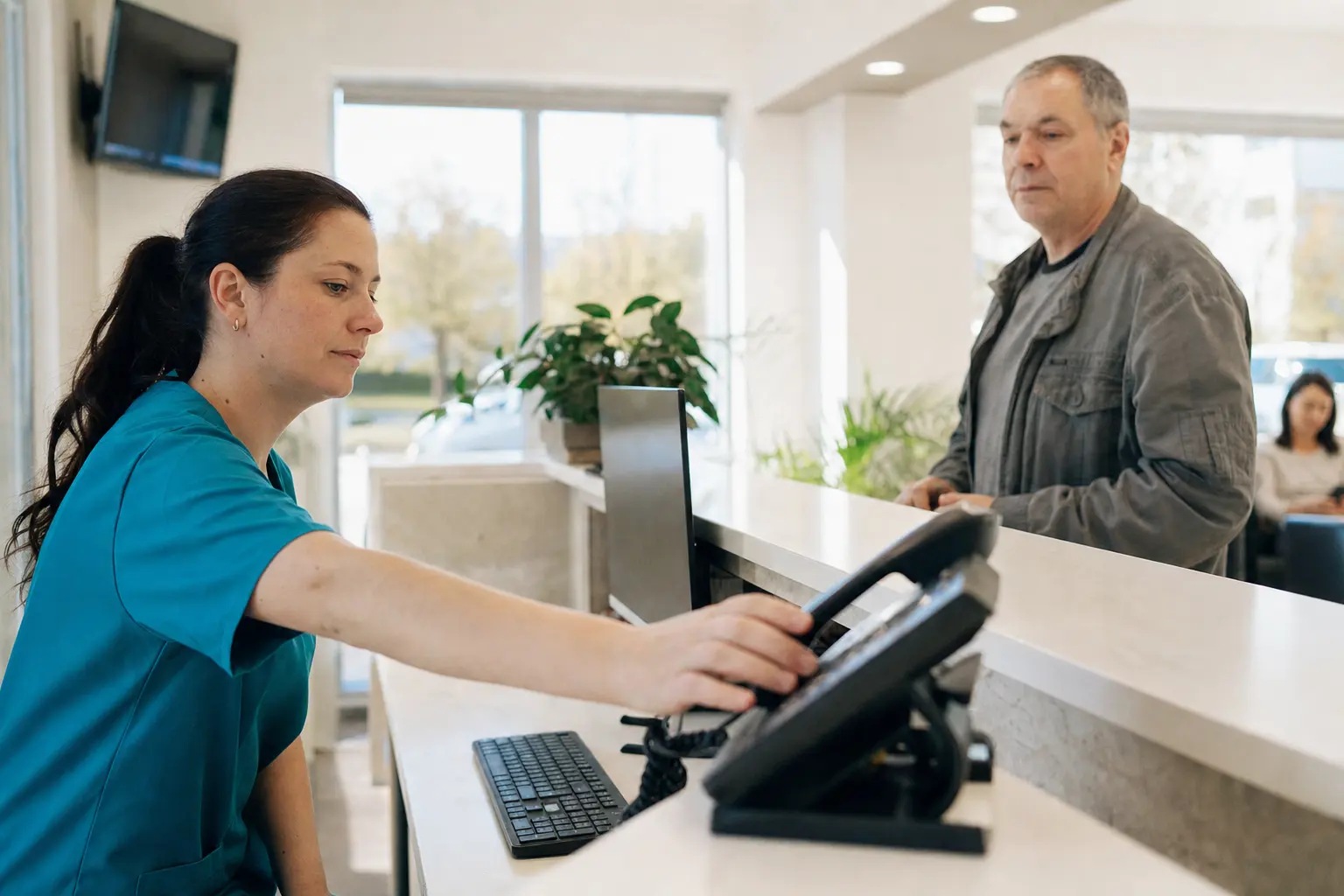
A part-time receptionist costs €1,500 to €2,000 per month before overhead. An AI dental receptionist? As low as €99. The gap is striking, but the real cost difference runs deeper than monthly fees. We're seeing practices lose 240+ patient conversations every month to competitors, simply because 80% of callers who hit voicemail hang up without leaving a message. When front desk turnover adds another €15,000 to €50,000 per replacement, the numbers behind reception deserve a closer look.
What phone coverage actually costs your practice today
The monthly invoice tells a simple story. A part-time receptionist runs €1,500 to €2,000 before you factor in sick days, holiday cover, or employer contributions. Traditional answering services sit somewhere between €300 and €800. Voicemail? Free on paper.
But the invoice only captures a fraction of what phone coverage actually costs.
We're seeing practices focus on the line items they can see while missing the expenses that never appear on any bill. The recruitment cycle alone tells a different story. Front desk turnover costs practices €15,000 to €50,000 per replacement when you account for recruitment fees, training time, and the productivity gap while a new hire gets up to speed. That figure rarely shows up in monthly accounts.
Then there's the coverage you think you have versus the coverage you actually deliver. A detailed breakdown of what a dental receptionist costs reveals layers most practice managers never calculate: the calls that go unanswered during lunch, the after-hours enquiries that disappear, the new patients who hang up instead of leaving voicemail.
The real question isn't what your receptionist invoice says. It's what every euro of patient phone accessibility costs when you map the full picture, visible and hidden alike.

"Your invoice shows €1,800. Your true cost runs five figures deeper."
The hidden costs that never appear on your invoice
Step 1: Calculate the recall labour drain
Manual patient recall consumes 15 to 20 hours monthly of receptionist time. Those are hours spent dialling, leaving voicemails, and updating records while live calls go unanswered. At typical hourly rates, that's €300 to €500 monthly in labour that reduces effective phone coverage rather than expanding it.
Step 2: Amortise the turnover cycle
Front desk turnover costs practices €15,000 to €50,000 per replacement through recruitment, training, and the productivity gap during onboarding. Spread that figure across 24 months between hires, and practices are quietly absorbing €625 to €2,083 monthly that never appears as a line item.
Step 3: Count the conversations walking out the door
Practices miss 25 to 38% of after-hours calls. The concerning part? 80% of callers who reach voicemail hang up without leaving a message. We're seeing this translate to 240 or more patient conversations monthly that simply go to competitors.
Step 4: Convert missed calls to revenue loss
At average treatment values, those missed conversations represent €12,500 to €20,800 monthly in lost revenue. Most practices attribute this to slow months or seasonal dips. The reality often traces back to phone accessibility gaps that never get measured.
The pattern is consistent across practices we work with. The visible invoice understates true costs by a factor of three or more.
Where AI receptionist pricing fits in the cost structure
European AI dental receptionist platforms range from €99 per month for chat-only solutions to €249 for packages including voice minutes. Full voice and scheduling capabilities typically sit between €249 and €499 monthly. US platforms run considerably higher, charging €320 to €1,100 for comparable features.
The important distinction: AI reception isn't a new expense category. It replaces specific cost centres. After-hours coverage, overflow handling, and recall automation all collapse into a single line item rather than requiring separate services or additional staff hours for each function.
The ROI data we're seeing is consistent across practice sizes. Single-provider practices on AI platforms report 22 appointments booked and 6 new patients acquired monthly. That translates to €10,000 or more in recovered revenue against €399 to €499 in monthly costs. The maths works out to roughly 20:1 return before factoring in reduced turnover exposure or recall labour savings.
Practices often approach AI as an add-on. The ones seeing the clearest results treat it as a substitution, mapping exactly which cost centres the platform absorbs. When a €399 monthly fee replaces €500 in recall labour, €625 in amortised turnover costs, and €12,500 in missed call losses, the positioning shifts entirely.
The invoice goes up slightly. The total cost of phone accessibility drops significantly.
The 15 task front desk audit: What AI eliminates versus what stays
Front desk phone work breaks down into 15 distinct tasks. We're seeing practices benefit from mapping exactly which ones shift to AI and which stay with the team.
Tasks AI fully automates:
- After-hours coverage and overflow during busy periods
- Appointment confirmations and follow-up reminders
- Recall outreach that currently consumes 15 to 20 hours monthly
- Waitlist management and rescheduling no-shows
- General enquiries and new patient intake collection
Tasks that remain human:
- Complex clinical discussions requiring professional judgment
- Sensitive patient situations needing empathy and nuance
- In-person patient interaction at the front desk
- Cases where clinical context changes the appropriate response
- Urgent request routing that requires real-time assessment
The waitlist automation data stands out. AI platforms with instant automated waitlist management fill 60 to 70% of same-day cancellations that would otherwise go empty. That's thousands recovered monthly without manual front desk effort.
The pattern across practices is consistent: AI absorbs the repetitive, high-volume phone tasks while staff handle the conversations that genuinely require human presence. The result frees 15 to 20 hours monthly for work that actually benefits from a person on the other end of the line.
The real calculation: Cost reallocation not new spending
The framing matters. AI reception isn't an additional expense line. It's a reallocation of costs practices already absorb through missed revenue and reactive spending.
| Cost centre | Current state | AI-assisted state | |-------------|---------------|-------------------| | Receptionist salary | €1,500, 2,000/month | €1,500, 2,000/month | | Turnover amortisation | €625, 2,083/month | Reduced exposure | | Recall labour | €300, 500/month | Automated | | Missed call revenue loss | €12,500, 20,800/month | Recovered through 24/7 coverage | | AI platform | €0 | €249, 499/month |
The no-show data tells a parallel story. Research on the true cost of empty appointments in dentistry shows practices lose £150,000 to £250,000 yearly to unfilled chairs. Practices with always-available AI rescheduling report no-show rates below 5%, compared to the 10 to 15% industry average. That gap alone covers years of platform fees.
We're seeing the shift clearly across practices. Reactive costs like turnover, missed calls, and manual recall labour become proactive investments in guaranteed reachability and automated follow-up. The spending doesn't increase. It moves from invisible losses to visible, controlled line items.
Practices already pay for phone coverage. The question is whether that payment happens through lost opportunity or through a platform that captures it.
Starting with the numbers your practice already has
Most practices can map their true phone coverage costs within an hour using data they already collect. The exercise reveals gaps that monthly invoices never show.
-
Pull missed call data from your phone system. Most VoIP platforms log unanswered calls by time of day. We're seeing practices discover 25 to 38% of calls happen outside staffed hours, with the majority never leaving voicemail.
-
Track receptionist hours on recall and confirmations. A simple time log over two weeks reveals whether 15 to 20 hours monthly disappears into manual outreach. That's time not spent answering live calls.
-
Calculate your last turnover event. Add recruitment fees, training hours, and the productivity gap during onboarding. The €15,000 to €50,000 range becomes concrete when mapped to actual invoices and lost output.
-
Review after-hours coverage as a starting point. Practices testing AI phone answering for dental practices often begin here. It's the lowest-risk entry since it addresses calls currently going to voicemail without changing daytime workflows.
-
Look for transparent pricing without long contracts. Platforms offering per-minute or flat-rate models allow testing before commitment. The goal is data, not a year-long obligation.
The practices getting clearest results know their current costs before comparing any solution. The numbers often surprise.
Calculate your practice's true phone coverage costs with a free reachability assessment from Voicelabs Dental.